Environmental Health and Precision Medicine Program (PRESAM)
Coordinador del programa
David de Gonzalo Calvo / Núria Eritja Sánchez
Coordinator groups: Clinical and Molecular Phenotyping (CMP) / Oncological pathology
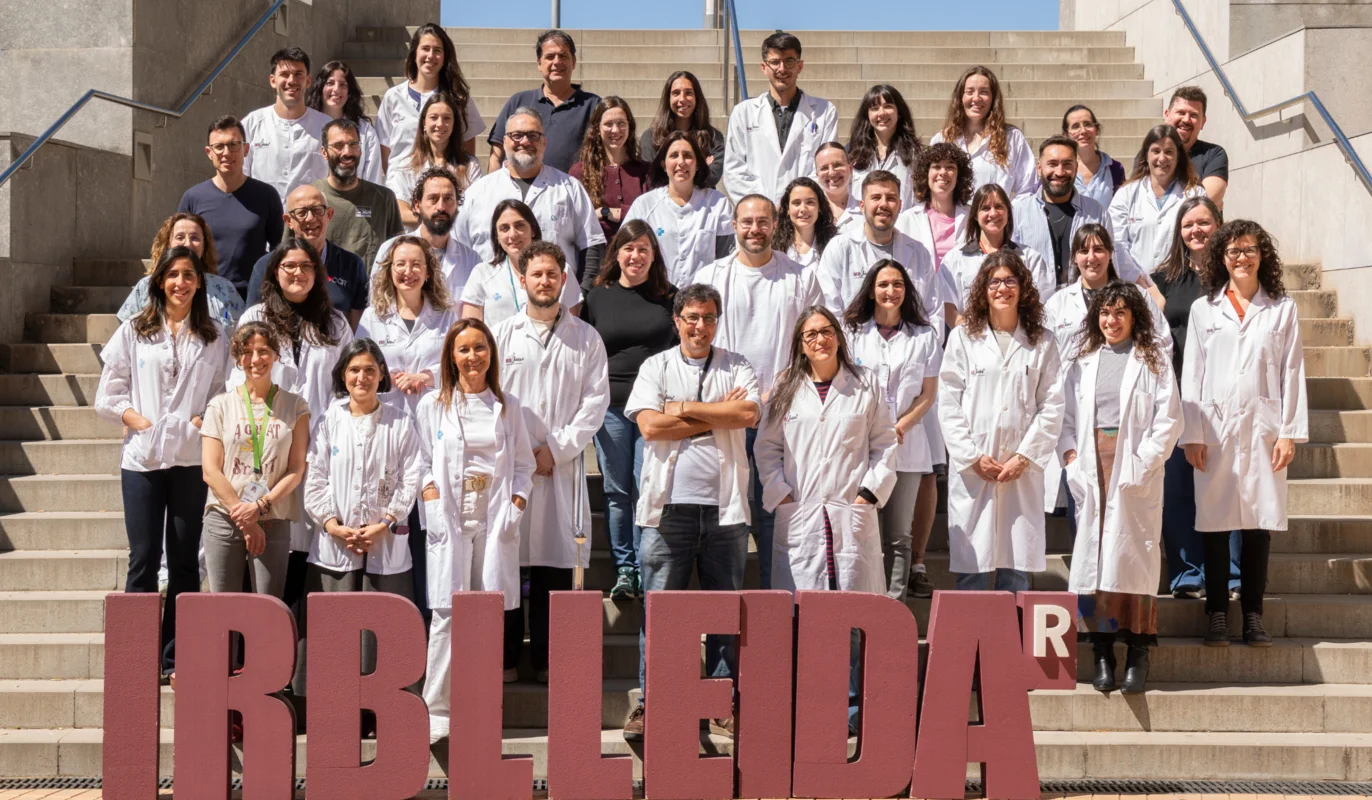
Research groups participating in the Translational Research Program
- +Pec Proteomics (Aida Serra, Xavi Gallart, Cristina Lorca, Itziar Molet, Maria Font, María Mulet, Jose Antonio Sánchez-Milán)
- Biological Foundations of Mental Disorders (Pepe Garcia)
- Cancer Biomarkers Research Group (GReBiC) (Annabel Sorolla, M. Alba Sorolla, Eva Parisi, Alba Sorolla, Judith Monné, Mariona Pont, Sajid Hussain, Maria Cano, Izaskun Urdanibia, Antonieta Salud, Ona Pallissé, Jose Manuel Porcel)
- Clinical Microbiology and Antibiotic Resistance (Alba Bellés, Saray Mormeneo, Albert Bernet, Elena Sánchez)
- Clinical and Molecular Phenotyping (David de Gonzalo, Marta Molinero, Manel Pérez, Carlos Rodríguez, María C García-Hidalgo, Alfonso Cordero, Alfonso Herreros)
- Clinical Neuroscience (Sara Salvany, Cristina Pereira, Francisco Purroy)
- Clinical Laboratory Quality Indicators (Alba Alonso)
- Drosophila Disease Models and (Epi)Genetic Analysis (Marina Laplana)
- ERLab, research in emergency medicine (Oriol Yuguero, Cecilia Llobet)
- Health Care Research Group (GReCS) (Joan Valls Marsal, Maria Cendrós, Jordi Martinez, Filip Bellon, Erica Briones, Jose T Mateos, Gemma Espigares, Alex Krassikova, Celmira Laza-Vázquez, Montserrat Gea)
- Health Education, Nursing, Sustainability and Innovation Research Group (GREISI) (Teresa Botigué, Anna Espart, Laia Selva, Rosa Maria Alzuria Alós, Virginia Garcia Reglero)
- Metabolic Physiopathology (Èlia Obis, Anna Fernandez, Joaquim Sol, Natalia Mota, Mariona Jové, Reinald Pamplona)
- Oncological Pathology (Núria Eritja, Anna Macià, Christopher Rios, Judit Gracia, Rosa Maria Martí, Manel Albertí, Sara Olave, Sònia Gatius, Xavier Matias-Guiu)
- Others research lines (Paula Sol Ventura, Eduard Sole Mir, Luis Isaac Ramos Garcia, María Fernanda Ramírez Hidalgo)
- Systems Biology and Statistical Methods for Biomedical Research (Ester Vilapriñó, Rui Alves, Alberto Marín-Sanguino, Emilce Martínez, Abdrahman Eleiwa)
- Translational Research in Respiratory Medicine (Adriano Targa, Jordi de Batlle, Blanca Salinas, Anna Galán González, Rafaela Vaca, Iván Benítez, Esther Gracia, Gerard Torres Cortada, Ferran Barbé)
- Vascular and Renal Translational Research (Milica Bozic, Serafí Cambray, Catalina Perez Olives, Dariel A. Rodriguez Falcon)
Objectives of the Translational Research Program
General objectives
PRESAM recognizes both the urgency and the transformative potential of the environmental health challenges facing Lleida. Its overarching goal is to build a collaborative, interdisciplinary research environment that advances understanding of the health impacts of complex environmental exposures. Through a structured, cross-sectoral approach, PRESAM aims to:
- Develop an integrated research framework that addresses the health effects of multifactorial environmental exposures, with a particular focus on the specificities of the Lleida region.
- Generate scientific knowledge that is directly applicable to real-world challenges, while supporting the implementation of precision medicine strategies for prevention, risk mitigation and evidence-based decision-making.
- Establish a sustainable internal collaboration framework that promotes interdisciplinary synergy and strengthens future applications to national and international research funding programs.
- Support existing projects at IRBLleida by creating a collaborative platform that facilitates synergy among ongoing initiatives.
- Train a new generation of researchers equipped to address emerging environmental health issues through innovative, data-driven methodologies
Specific objectives
Research Coordination Objectives
- Develop predictive models to identify individuals and populations at heightened health risk due to environmental exposures.
- Enable early detection of vulnerable populations and high-risk environments to support targeted public health interventions.
- Create and maintain long-term databases for interdisciplinary data sharing and future research.
- Establish integrated monitoring systems that combine environmental, clinical and molecular health data.
- Collaborate with regional public health authorities and stakeholders to translate scientific findings into policies and practical applications.
Capacity Building Objectives
- Facilitate interdisciplinary collaboration in environmental health by connecting academic, clinical and industrial stakeholders.
- Act as a platform for dialogue and knowledge transfer among researchers, clinicians and industry partner.
- Strengthen collaboration with European networks in One Health, Planetary Health, climate-health interactions and environmental epidemiology.
- Reduce inequality in research by ensuring equitable access to advanced techniques and equipment, regardless of the social, economic or gender status of partner institutions.
- Ensure ongoing exchange of knowledge, skills and expertise through activities such as annual scientific meetings and training schools.
- Provide structured training opportunities in environmental health for IRBLleida personnel at all career stages, enhancing internal capacity and institutional leadership in this emerging field.
- Promote leadership and involvement of early-career researchers.
Main activities
The PRESAM program is organized into six complementary Work Packages (WPs). WP1 ensures effective governance and coordination, while WP2 focuses on dissemination, communication and stakeholder engagement. The core scientific components of the program are distributed across WP3, WP4, WP5 and WP6, each addressing a major dimension: chemical exposures (WP3), physical environmental stressors (WP4), biological agents (WP5) and population vulnerability (WP6).
Notably, the scientific content of these WPs is built on research proposals submitted by members of the PRESAM network. This bottom-up approach is a key strength of the program. Each package will focus on concrete and realistic tasks. It ensures both the scientific relevance and feasibility of the subprojects, while also reinforcing the active involvement and long-term commitment of participating research groups.
This approach also facilitates the development of pilot projects, produce robust preliminary data and position the program members for success in future competitive funding calls.
The detailed scientific deliverables, milestones and implementation plan of each subproject are specified in the corresponding section "ANNEXES. SUBPROJECTS.", which constitutes an integral part of the Program's operational framework.
WP1: Governance and Strategic Coordination
Main Objectives
WP1 ensures the effective coordination and overall governance of the PRESAM program. Its main objective is to guarantee that all activities across work packages are aligned with the program's scientific goals and institutional responsibilities.
It provides the structural support needed to keep the program coherent, well-integrated and adaptable to both local priorities and emerging research opportunities.
WP2: Dissemination
Main Objectives
The main goal of WP2 is to ensure that the knowledge generated by PRESAM is communicated effectively, broadly disseminated and translated into real societal impact.
This includes not only sharing scientific results but also making them understandable, relevant and accessible to a wide range of audiences.
WP2 aims to raise awareness of environmental health challenges in the province of Lleida, promote trust in science and foster active participation from stakeholders, including policymakers, healthcare professionals, researchers and the general public.
WP3: Chemical Exposome and Emerging Contaminants
This work package aims to explore the health impacts of exposure to environmental chemical pollutants in the province of Lleida.
The focus is on contaminants typically associated with agricultural, industrial and domestic activities. WP3 seeks to quantify these exposures in vulnerable populations and investigate their links with key physiological and clinical endpoints.
WP4: Physical Exposome and Environmental Factors
This work package explores how physical environmental exposures, such as air, temperature extremes, noise and artificial light, affect health outcomes in the province of Lleida.
WP4 places special emphasis on how these interact to influence metabolic, circadian health and healthcare service demand.
The overarching objective is to generate evidence linking environmental stressors to biomarker-based indicators of physiological function, thereby supporting personalized prevention strategies within a precision environmental health framework and ultimately informing local health policies
WP5: Biological Exposome and Disease Vectors
This work package focuses on biological exposures that affect human health, particularly those related to antimicrobial-resistant pathogens circulating in the environment, animals and clinical settings.
Anchored in a One Health approach, WP5 investigates how intensive livestock activity and environmental conditions contribute to the emergence and transmission of resistant bacteria.
The WP also integrates molecular tools to identify predictive biomarkers and develop more targeted diagnostic and therapeutic strategies.
WP6: Population Vulnerability and Urban–Rural Gradient
This work package investigates how environmental exposures interact with geographic, social and structural inequalities to influence population health in the province of Lleida.
WP6 focuses on the urban-rural gradient, paying particular attention to how living in rural or underserved areas may amplify vulnerability to environmental health risks.
The work will explore barriers to timely diagnosis, unequal access to healthcare services and impact of pesticide exposure.
Special emphasis is placed on groups known to be at increased risk, such as women or the elderly and low-income populations, ensuring that environmental health research does not overlook those most affected.
Projects
Environmental Nephrotoxicity in Emergency Patients: Biomonitoring of Chemical Exposures and Kidney Risk Assessment (NEPHRO-EX)
- Code
- PH100004
- IP
- MILICA BOZIC
Geolocation of Precocious Puberty Cases and Their Association with Pesticide Exposure in Water Sources in the Province of Lleida
- Code
- PH100002
- IP
- ESTER VILAPRIÑO TERRE, PAULA SOL VENTURA
Plasma Biomarkers of Environmental Contamination Linked to Atrial Fibrillation
- Code
- PH100003
- IP
- AIDA SERRA MAQUEDA, XAVIER GALLART PALAU
MATRISENS: Maternal Biomonitoring of Environmental Exposures in Lactation
- Code
- PH100005
- IP
- ELIA OBIS MONNE
Non-invasive monitoring of nutritional and hormonal status in sleep-related chronodisruption (CHRONOBIOM)
- Code
- PH100007
- IP
- BLANCA SALINAS ROCA
Targeted detection of endocrine disrupting chemicals in human plasma: Implications in cancer development and environmental health. PRESAM-OncoEDC
- Code
- PH100006
- IP
- MARIA ALBA SOROLLA BARDAJI, NURIA ERITJA SANCHEZ
Ambient temperature and indicators of sleep and circadian health in Spain: a pilot study
- Code
- PH100008
- IP
- ADRIANO TARGA DIAS SANTOS
Impact of Heat Waves on Hospital Admissions and Emergency Healthcare Demand in Lleida
- Code
- PH100009
- IP
- JOAN VALLS MARSAL
Molecular epidemiology of Staphylococcus aureus causing invasive and osteoarticular diseases from a One Health perspective in a region with high pig farming density
- Code
- PH100010
- IP
- ALBA BELLES BELLES
Non-coding RNA-based prediction of antibiotic response in patients with chronic obstructive pulmonary disease
- Code
- PH100011
- IP
- DAVID DE GONZALO CALVO
Environmental Endocrine Disruptors and Fertility: A Pilot Biomonitoring Study in Couples from Urban and Rural Areas of Lleida (FEDpair Project)
- Code
- PH100012
- IP
- ANNA ESPART HERRERO
ECO-RAD: Economic and Environmental Impact of Ultra-Hypofractionated Radiotherapy in Breast Cancer
- Code
- PH100013
- IP
- TERESA BOTIGUÉ SATORRA, VIRGINIA GARCIA REGLERO