Presentation
Over the last few years, Institute for Research in Biomedicine of Lleida (IRBLleida) has had a management of innovation linked to other departments and often stemming from the need of researchers to protect their results and research. As a result, it has become increasingly clear that it is important to set up a unit within IRBLleida devoted exclusively to innovation and transfer to provide answers and advice to all the research staff.
Now, IRBLleida has a new and updated Innovation Unit made up of experienced, highly qualified human capital with extensive experience in innovation and transfer, both in private and research institutions.
At the same time, the Innovation Plan is being implemented, which will facilitate the acceleration of innovation and the cultural change of transfer within the institute. The strategy we are following is based on 6 strategic lines that allow us to connect research to the business environment, both local and international, and consequently to the needs of citizens. These are:
Over the last few years, the Biomedical Research Institute of Lleida (IRBLleida) has progressively strengthened its activities in innovation and knowledge transfer, mainly driven by researchers' commitment to generating impact from their research outcomes. In an increasingly translational research environment, the need for a specialized structure capable of supporting, advising and enhancing innovation and research valorisation processes has become evident.
With this vision, IRBLleida has strengthened its Innovation and Knowledge Transfer Unit by establishing a multidisciplinary team with extensive experience in innovation, technology transfer, knowledge valorisation, and collaboration with both the public and private sectors. This unit has become a key element in promoting research excellence with a real impact on health, society and the economic development of the region.
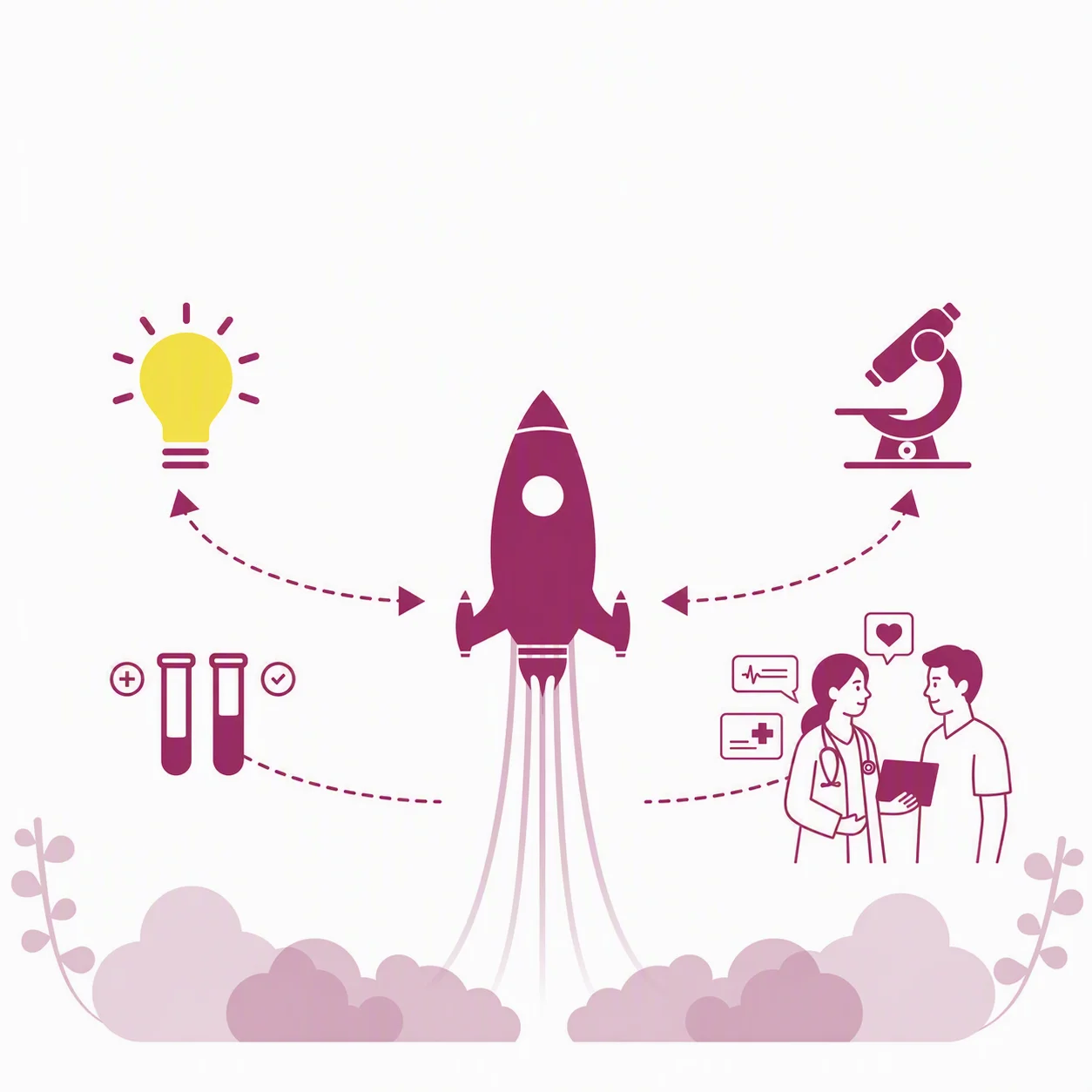
In line with IRBLleida's 2026-2030 Strategic Plan, an innovation strategy has been deployed to position innovation and knowledge transfer as core elements of research activity. The objective is to facilitate the transformation of knowledge generated at the Institute into solutions with health, social and economic impact, while strengthening connections with the various stakeholders of the research and innovation ecosystem. This strategy is structured around three main strategic lines:
- SL1. Embedding innovation into everyday research practice, integrating innovation as a natural component of scientific activity and fostering a participatory culture that enables the identification of valorisation opportunities from the earliest stages of research.
- SL2. Promoting knowledge transfer, encouraging the protection, development and transfer of research results to the healthcare system, industry and society, with the aim of generating tangible improvements in citizens' health and well-being.
- SL3. Integrating the ecosystem and building alliances, strengthening collaboration with hospitals, universities, research centres, companies, public administrations and other strategic stakeholders to accelerate innovation processes and broaden the reach of developed solutions.
The innovation unit carries out a range of activities and tasks for our researchers and economic partners. The actions carried out in this unit include, among others:
- Search for business opportunities that lead to investment in new research.
- New strategies for private and public industry relations and fostering partnerships in the early stages of technology.
- Cooperate with international partners to help position our innovation at an international level and make new contacts.
- Search for new tools to accelerate innovation.
- Economic evaluation and research of projects or market ideas.
- Protection of intellectual property strategy.
- Search for public support or private funding to further develop technology to increase its value.
- Search for partners interested in the technology (partnerships and technology intermediaries).
